Case studyVihara Innovation NetworkGates Foundation fundedDec 2024 – May 2025
Family planning in Meghalaya
Behavioural insights-led interventions to lower adolescent pregnancies and increase the adoption of family planning and birth spacing in Meghalaya.
My roleDesign researcher: led the Basket of Choice toolkit end to end (information architecture and design), supported secondary research
What it involvedResearch, collaborating with doctors, psychologists and an illustrator, design, prototyping, user testing
ToolsFigma, Adobe Illustrator, Google Slides
Timeline7 months, December 2024 to May 2025
TL;DR
Meghalaya's Health Department (NHM), Vihara Innovation Network and FinalMile Consulting ran a Gates Foundation-funded programme to lower adolescent pregnancies and increase birth spacing, using behavioural insights.
The research showed the challenge is not rooted in lack of awareness alone, but in a complex interplay of cultural beliefs, emotional dynamics and systemic silences.
I led the Basket of Choice end to end: a visual job aid that frontline health workers carry to counsel couples across 12 traditional and modern methods, now used in their training.
About the project
Supporting informed choices in reproductive health
In an effort to increase the adoption of family planning methods, the Health Department (NHM) is collaborating with Vihara Innovation Network and its partner FinalMile Consulting to implement a program that aims to lower adolescent pregnancies and increase the adoption of family planning and birth spacing in Meghalaya. It is being funded by the Gates Foundation and is using behavioral insights-led interventions.
This project focuses on developing insights-driven interventions to improve the efficacy and acceptance of both traditional and modern contraceptive methods. The broader goal is to support communities in making informed transitions toward modern family planning practices, fostering greater autonomy and well-being in reproductive health decision-making.
Objectives of the study
Investigate beliefs and perceptions that lead couples to consistently rely on traditional contraceptive methods, and coping approaches around failures
Capture insights around communication dynamics, negotiations and decision-making processes related to traditional method and modern method use from both men and women
Identify and establish active/ relevant channels for better community engagement and developing referral pathways
Design, Iteratively test, and Implement high impact behavioral interventions applicable at a statewide level alongside state departments
Pilot the suite of interventions and generate rigorous evidence around their impact and sustainability to achieving positive birth spacing outcomes across Meghalaya
Analysis & Design InterventionMar – April 2025 · 2 months
Implementation of 1st Phase of Design InterventionMay – July 2025 · 3 months
Roll-out of 2nd Phase of Design InterventionAug 2025 – July 2026 · 12 months
I was on the project from December 2024 to May 2025.
Project context
A matrilineal, tribal, hilly state
Majority of people in Meghalaya are tribal, the main tribes being the Garo, Khasi, and Jaintia.
GeographyThe three tribal regions have varying terrains. Meghalaya's hilly and challenging terrain significantly hampers connectivity and transport.
Cultural normsThe three tribes are united by the common thread of matriliny, where inheritance and lineage pass through women. Women's decision-making power is influenced by land ownership, education and economic independence. Men traditionally play more active roles outside the home, as cash earners for the family.
Health systemDistricts with difficult, hilly terrain display major gaps in healthcare infrastructure, owing to a complex mix of challenges including terrain and resource shortages.
Concerning indicators
27%Contraceptive Prevalence Rate (CPR)
26.9%Total unmet need
2.9Children per woman, Total Fertility Rate (TFR)
7%Teenage pregnancy (15–19 year olds)
75%Home deliveries: one of the highest in Meghalaya, as a result of high accessibility barriers and economic stress
Indicators from NFHS-5.
What shapes choices
Fertility is seen as sacred, a gift not to be restricted
Parity preference refers to the desired number of children or ideal family size that individuals and couples build, often early in a relationship. The lower the preference, the stronger the intention to space.
Low parity preference
Past economic stress builds an early and low parity preference. It is hard to shift, and often supersedes religious or clan mindsets.
Future aspirations build a mid to low parity preference, to ensure a better quality of life for future generations.
High parity preference
Religious and clan mindsets build a desire for open and high parity. This is hard to shift, even after urban migration or exposure, with a strong girl preference.
Cultural bias against limitingPreference for open and high parity is rooted in the belief that fertility is sacred, a natural gift that should not be restricted. This reinforces a preference for spacing methods that align with the natural rhythm of fertility, rather than permanent or long-acting methods. Women also often prefer to keep their reproductive options open, especially in fluid domestic partnerships, where relationship stability may shift over time.
Two stories from the community
Illustrative stories built from the research. The names are pseudonyms.
Fally and Aiden, facing economic stress, prefer low parity and choose traditional contraception after one daughter. Despite a failure leading to abortion, they avoid long-acting or permanent methods, reflecting cultural reluctance to limit fertility.
Avoidance of limiting despite achieving desired parity
Pranita and Aaron, with a high parity preference and four sons, briefly used Cu-T and OCP after a health emergency, before switching to withdrawal and SDM. Despite not wanting more children as their son prepares for marriage, they remain unwilling to use limiting methods.
Underlying system realities
Not a lack of awareness alone
Our action-based research revealed that the challenges around family planning in Meghalaya are not rooted in lack of awareness alone, but in a complex interplay of cultural beliefs, emotional dynamics, and systemic silences. These factors collectively shape how individuals, especially adolescents, understand and engage with reproductive health.
Learning 1
Pro-life Sentiment
Many couples express preference for larger families, influenced by pro-life beliefs rooted in tribal and religious values where life is seen as sacred, children are considered blessings from God, and abortion is viewed as a sin.
Learning 2
Intimacy beyond Procreation
Love marriages are common, and emotional intimacy underpins them. Trust and shared moments foster emotional connection, which often leads to sex. Sex is seen as mutual pleasure and emotional intimacy. Intimate partnerships focus more on connection than planning, therefore birth spacing and contraception are rarely discussed.
Learning 3
Adolescents & the Silence Around Safe Sex
Dating and sex are common among teenagers, but no one talks to them about safe sex. At the same time, pro-life beliefs normalize pregnancies, leaving teens unsupported and unjudged. This results in a significant information gap during a critical developmental stage.
Learning 4
Early Parenthood treated as Adulthood
Early parenthood is normalized and, in many cases, embraced. It is seen as a natural step into adulthood, with many adolescents feeling prematurely ready due to early entry into the workforce.
Our approach
What makes our approach different?
Building an Intention to spaceCouples have open and high-parity with extremely low intent. It is critical to engage them to first build intention.
Expanded Basket of Choice with TMsGiven the Meghalaya community and context, there is a need for an expanded Basket of Choice which includes Traditional and Modern Methods. Traditional Methods as an entry point to support the community adopt spacing.
Birth-Spacing, Not LimitingCommunity has strong concerns about reproductive limiting and fertility. Adopting the positioning of birth spacing as an act of love and care.
Tailored Intervention for Birth SpacingCouples have different reproductive preferences and needs. They require tailored intervention strategies and engagement to support them through the method uptake.
Levers to build an intention to space & FP uptake
Capacity Building of HWsMother & Child BondingLeveraging Pro-life beliefSex EducationNarrative around intimacyAddressing HesitancyEconomic PressuresInformed Decision & ChoicesMale EngagementUsing Disruptive Channels
Design intervention
"Family Planning is about ensuring every child is born into love and stability."
Three stages of design intervention
Stage 1
Capacity Building of FLWs
Orientation Training Module (Mindset shift)
Beneficiary Needs Assessment Training (Spacing intention & mindset assessment)
Tailored Counseling Scripts and Training (Personalized strategies | Method Mix Curation)
Expanded Basket of Choice (Counseling on contraceptive methods)My work
Engagement with Community Channels (Identification of new channels | Rapport building with community)
Stage 2
Community Engagement
Gamified & Storytelling Tools to engage Women & Men to build an Intention to Space
Economic impact of multiple children and pregnancies
Health Impact of multiple pregnancies for women and children
Impact of multiple pregnancies on couple dynamics and relationship
Stage 3
Adolescent Engagement
Gamified Aspiration setting | Enact choice making | CP information embedded
Storytelling tools on consent, safe sex & relationships | Light CP information embedded
Disruptive channels for messaging and distribution: Themes of intimacy & mutual pleasure; Salons and Parlours, Teer shops
Toll-free number for contraceptive information desk
My work
The Basket of Choice: an interactive display tool
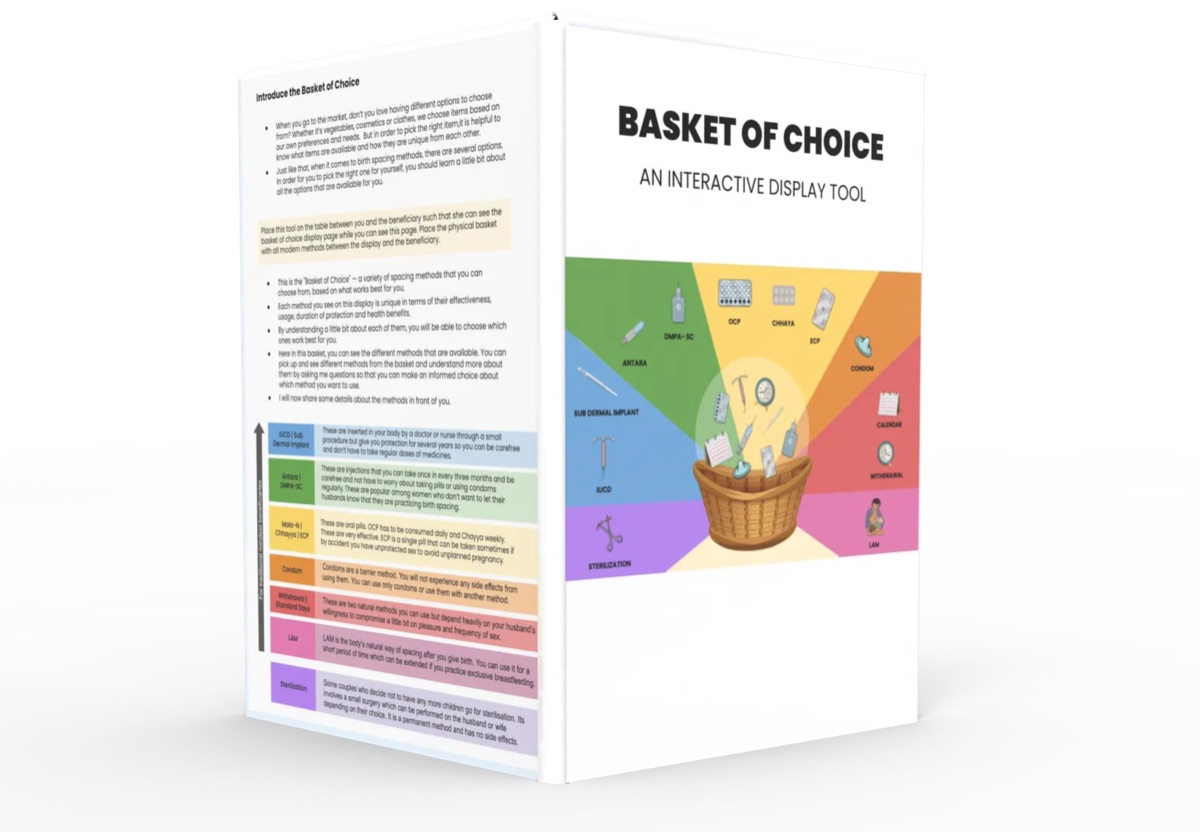
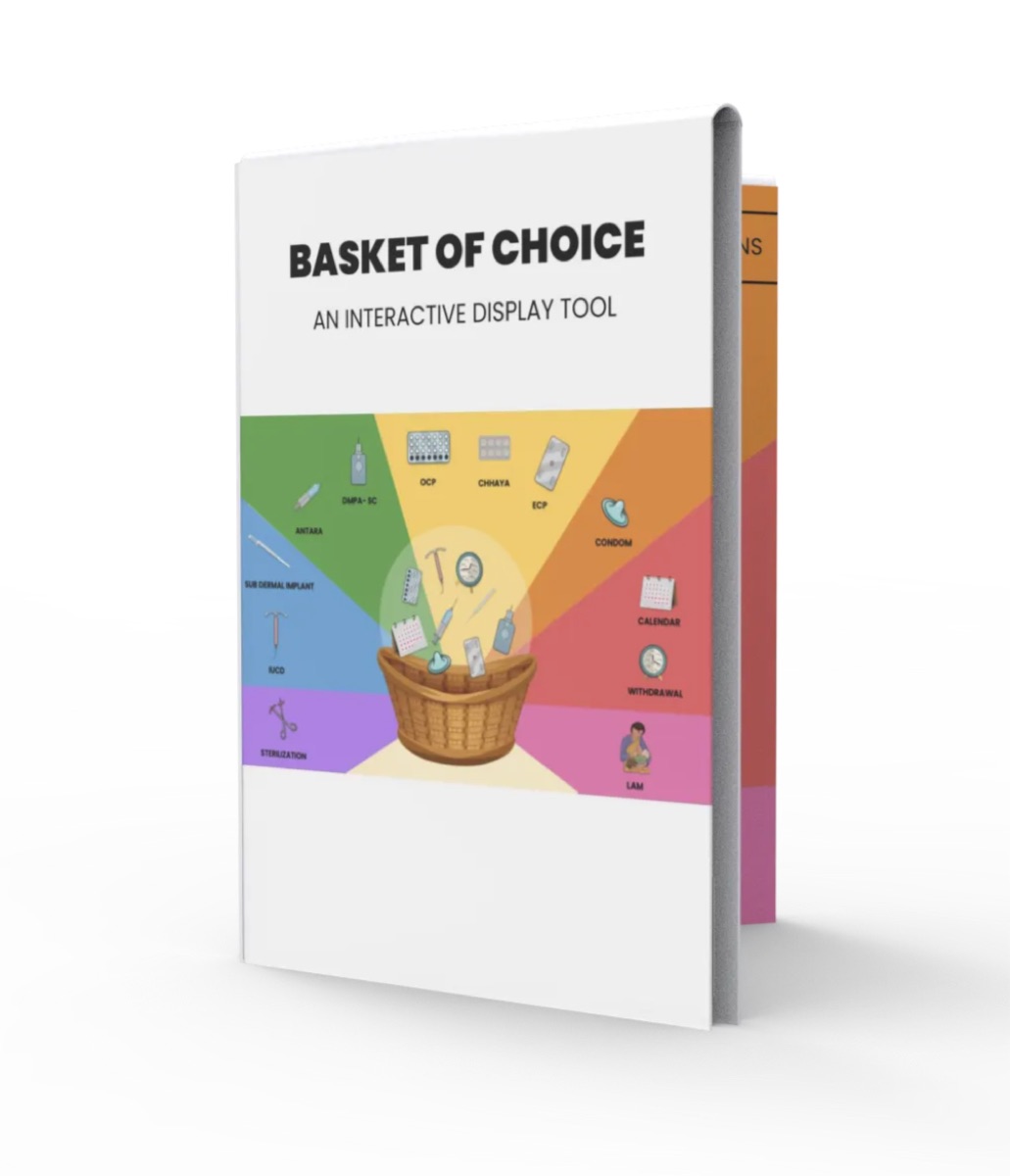
A visual, paper-based job aid, like a flip chart, that frontline health workers (FLWs) can carry and use during counselling to guide method selection by beneficiaries. It displays information on the correct usage, pros and cons of both traditional and modern methods. I designed it end to end.
Fold 1Closed portable folderA4, folded from a full print on A2Front: cover with the basket of choice display image. Back: a brief script for counsellors to introduce the basket of choice.
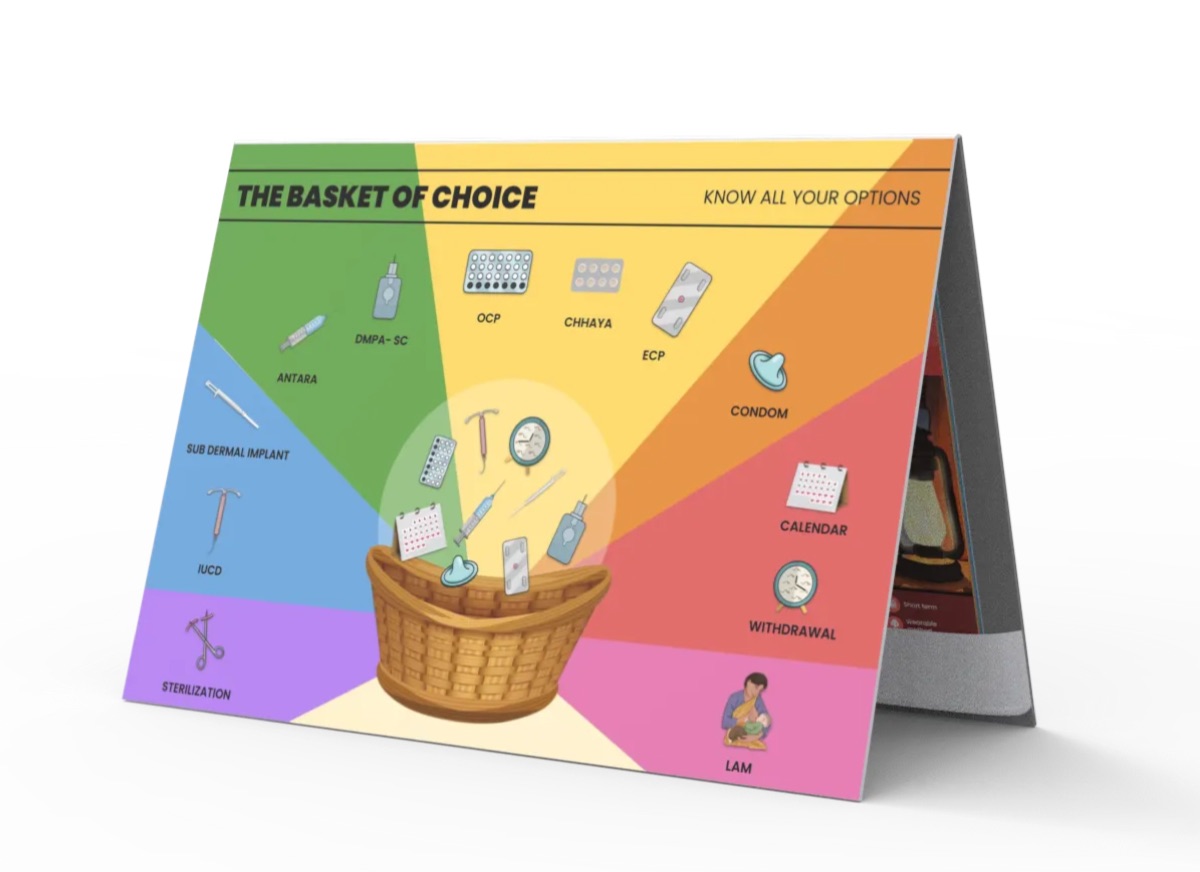
Fold 2Open display tentA3Opens out into a standing display for the counselling session.
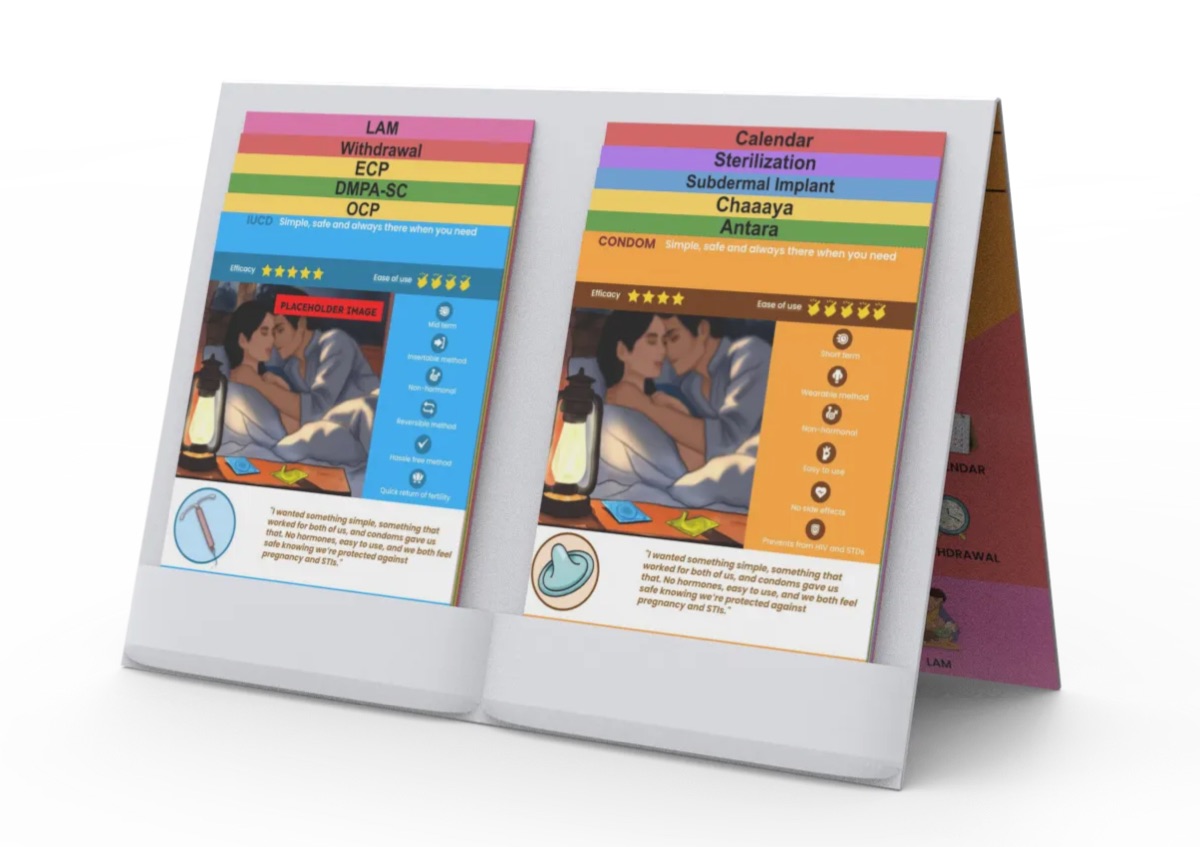
Fold 3Open tent with stacked cardsA3Front: stacked method cards for the beneficiary to pick and see. Back: a table to help the counsellor curate methods based on the beneficiary's preferences.
The expanded basket of choice
Not the usual basket of choice, but an expanded one: it combines the modern methods suggested by health workers with the traditional methods the community already uses, 12 methods in all.
Each card has a beneficiary-facing page and a facilitator-facing page. All cards are 8.27" wide, and their heights step down from 10" to 7.5", so when they are stacked, every method's name stays visible.
Tap a card to see both its pages.
On the field
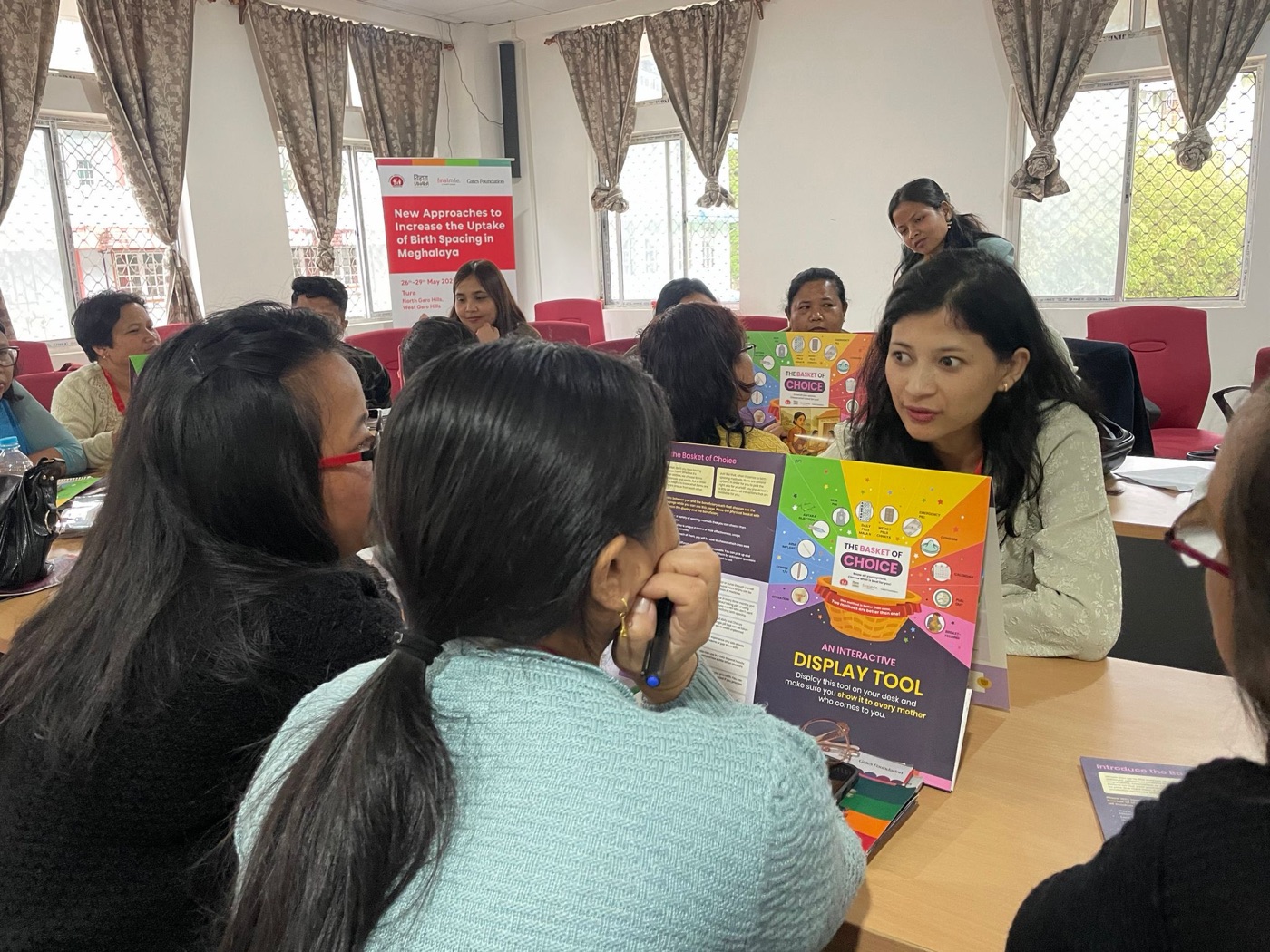
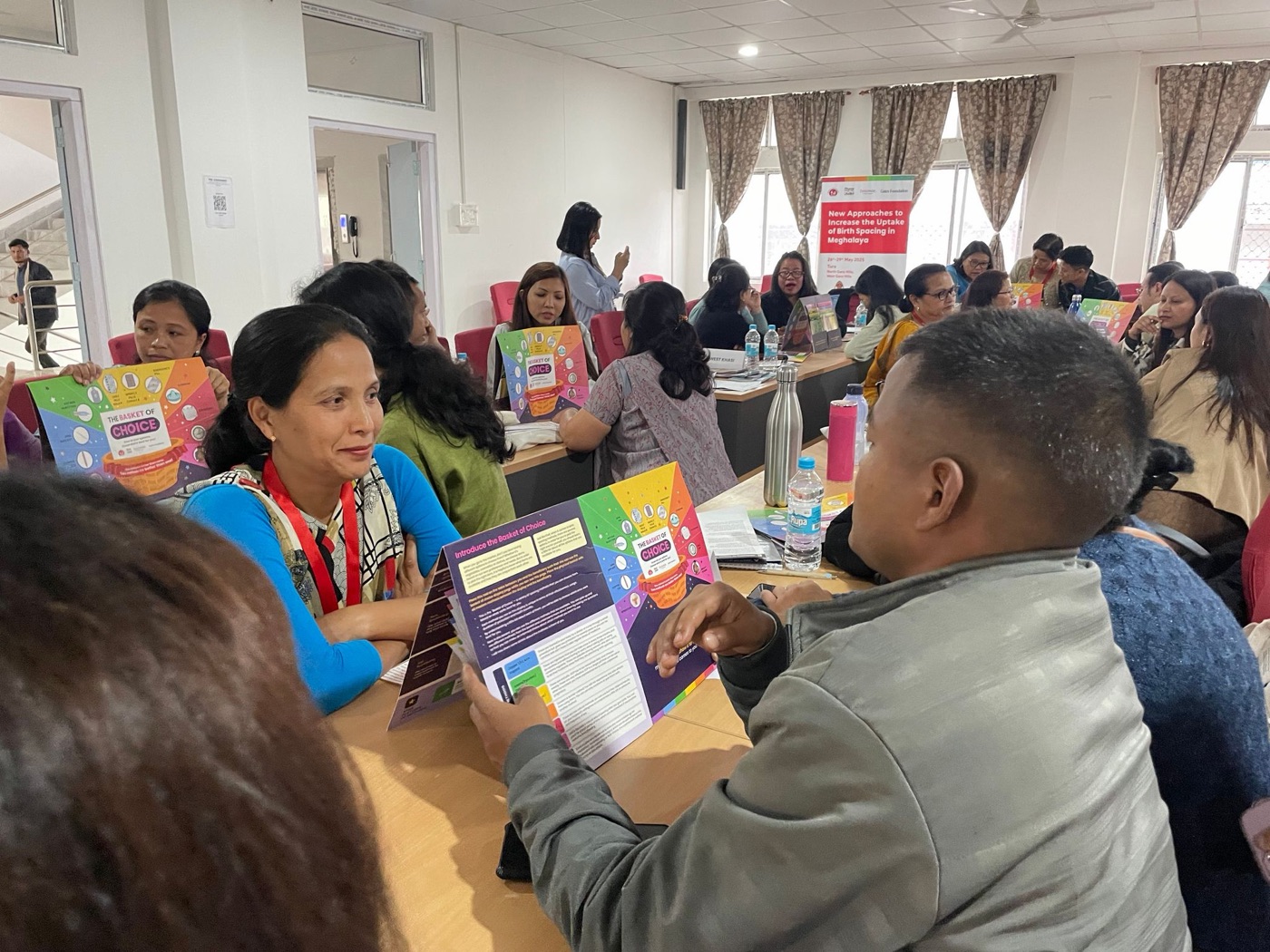
The Basket of Choice in use at a training session with health workers.
Impact
A tool that invites conversation
The intervention was designed for community engagement and capacity building of FLWs. Health workers moved through the orientation training module, beneficiary needs assessment and tailored counselling scripts, and then came to the expanded basket of choice.
Field workers really liked itWe shared it on the field with FLWs, and there was a lot of positive feedback.
It sparked engagementPlaced on the health worker's tabletop, the interactive tool created a nice sort of engagement.
Curiosity becomes a conversationThat was the objective: anyone who comes to an FLW out of curiosity can touch and interact with it, and ask about methods.
Every method in one placeAll the methods, traditional and modern, were easily available to see and compare.
Looking back
What I took away
Getting it medically right
At Vihara I worked with many stakeholders and people from different fields. To design the tool, everything had to be medically correct: it took a lot of medical research and conversations with doctors and psychologists to get the quantities, dosages, and how and when each method is taken, before presenting them in a visually interactive, engaging format.
Sharing the vision with an illustrator
My work as a designer was mainly the information architecture: making sure the details on every card were correct, and designing the tool itself. For the illustrations, I collaborated with an illustrator, sharing the vision of how each method is used. It was a really fun part of the project.
Simplifying without losing what matters
I handled this tool single-handedly, through many rounds of reviews: sometimes things worked, sometimes they didn't. The hardest part was taking a lot of information and medical terms about each method and bringing it down to one card, so it doesn't feel verbose but the important information still gets across.